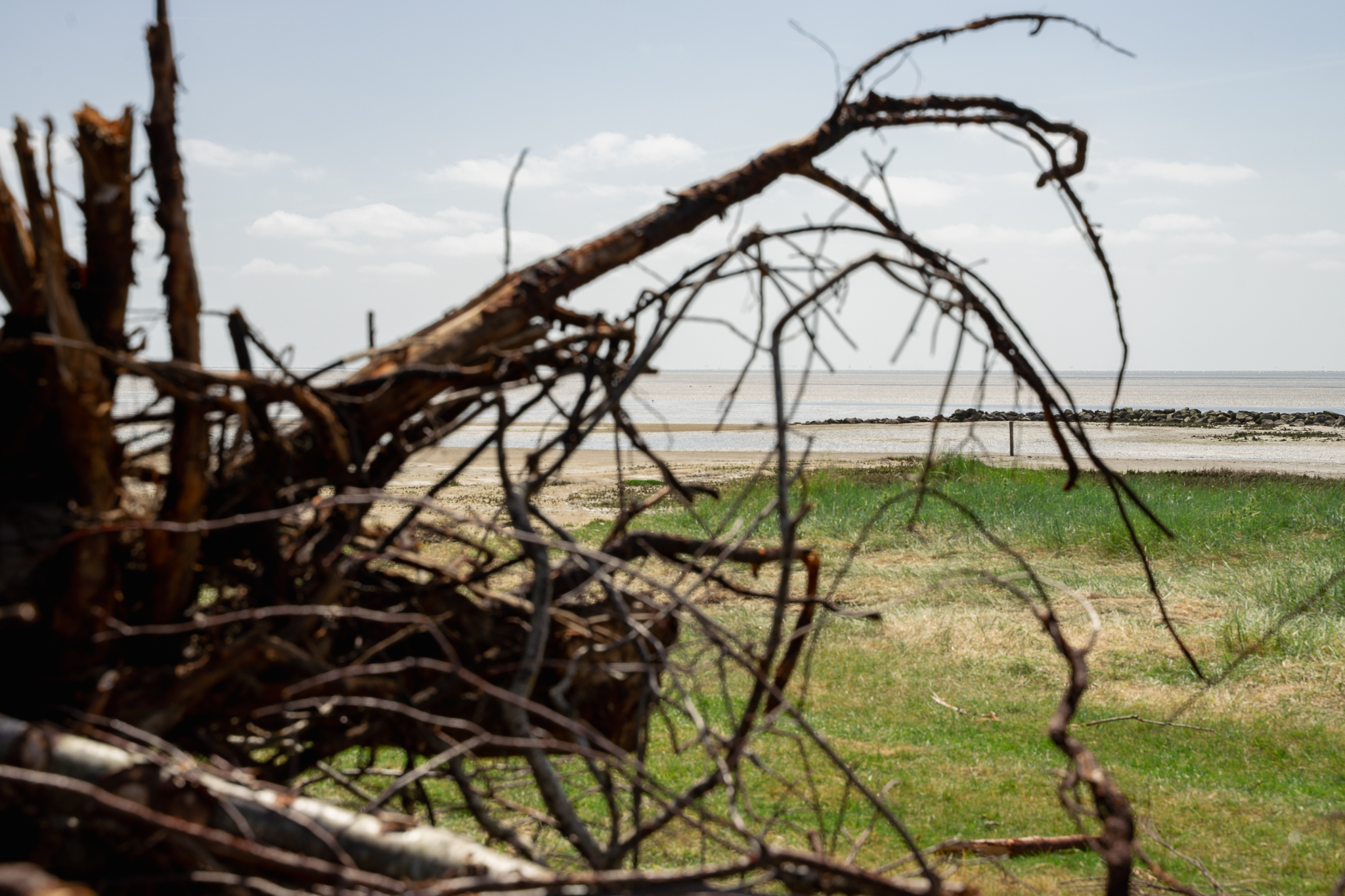
This created a dilemma: how do you protect the valuable Grië and Rimkeskooi areas without placing too many constraints on the natural processes that shape the landscape? And how do you ensure that the natural transition from dunes and salt marshes to the Wadden Sea remains as undisturbed as possible?
"Extending the rock revetment was not an option. So we started looking for a more nature-based solution," says Dolf Visser. Dolf is the Natura 2000 Project Manager for the Wadden Islands at the Province of Fryslân and a member of the Boschplaat programme team. The Province of Fryslân leads the Wadden Sea Salt Marsh Edge programme within the Boschplaat Vision.
The solution was found in the form of a brushwood barrier extending from the existing rock revetment. The barrier consists of two rows of wooden posts with pruned branches from the island woven between them. The idea is that the brushwood barrier dissipates wave energy before the waves reach the salt marsh edge, while being less rigid and intrusive than a stone structure. It also allows water to pass through more freely than a rock revetment.
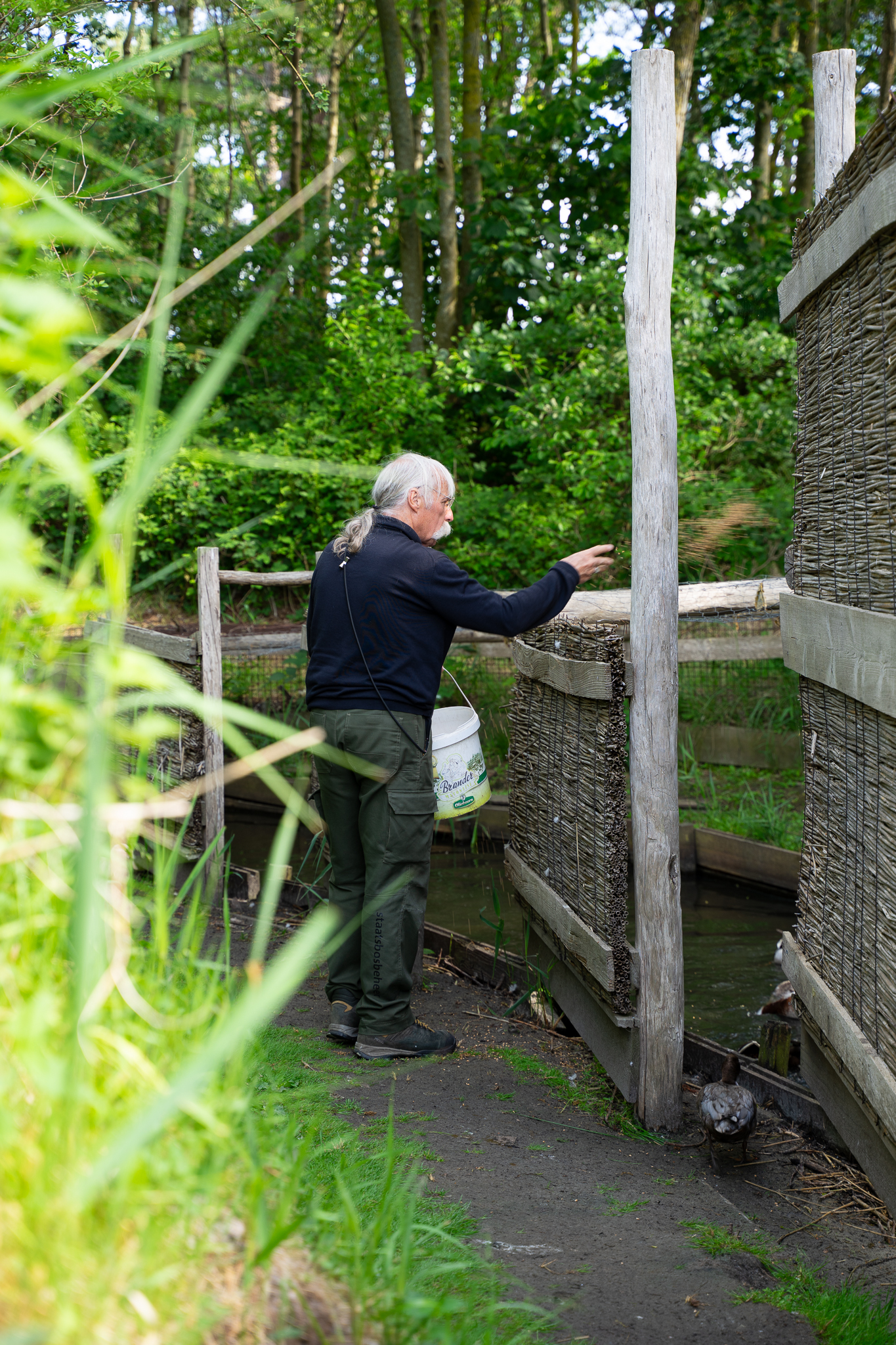
This is the first time a brushwood barrier has been used on Terschelling for shoreline protection. For that reason, a pilot section will be installed first. "We will build a brushwood barrier approximately 100 to 150 metres long, extending just beyond the duck decoy. This will protect the duck decoy while allowing us to study how effectively the brushwood barrier performs."





%20(1).jpg)