Actueel






%20(1).jpg)


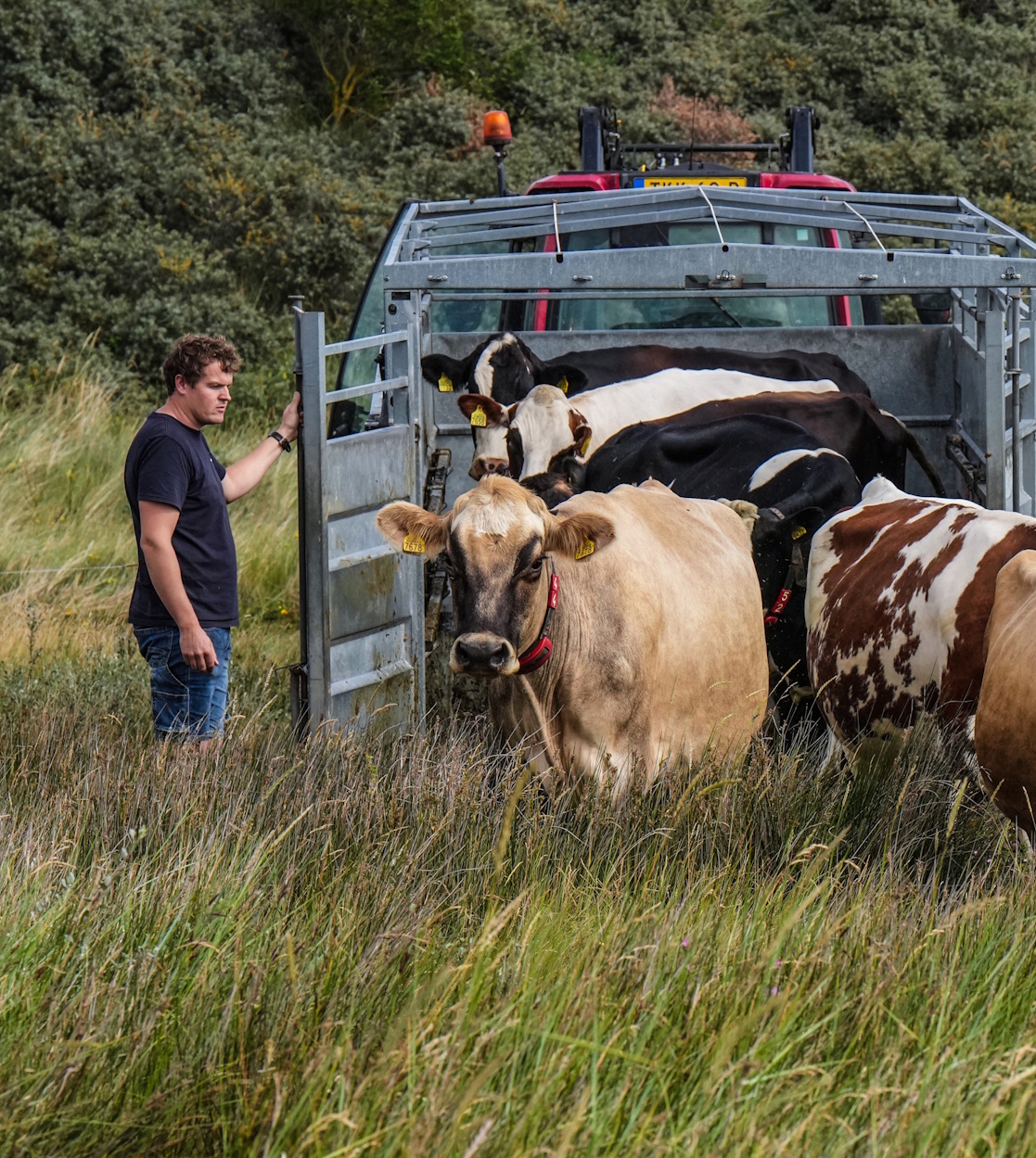
Farmer Corné Zorgdrager has released his cows onto the salt marsh; the first step in implementing the Boschplaat Vision.
Cows contribute to the implementation of the Boschplaat Vision
From summer through autumn, cattle from a local organic farmer on Terschelling will graze the salt marsh behind the Stuifdijk. In doing so, they are making a significant contribution to the restoration of the Boschplaat.

Farmer Corné Zorgdrager releases his cows.
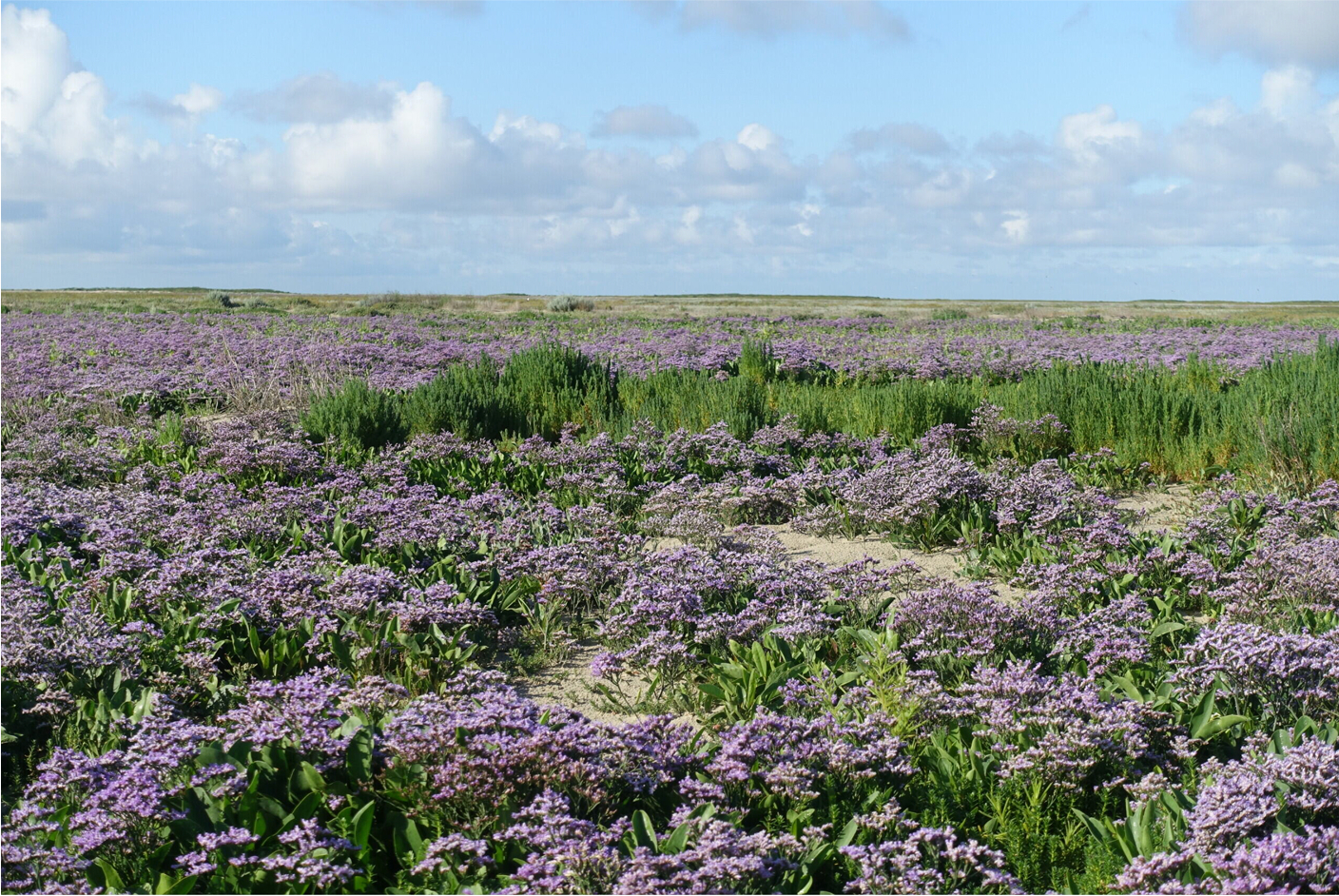
It is a special moment: for the first time, cows are grazing along the Stuifdijk on the Boschplaat. At first, the animals curiously explore their new surroundings, but they soon set to work with conviction on the task for which they were brought to the Boschplaat: grazing. Over the coming months, the herd will be able to feast on everything growing on the salt marsh. This is not only good for the animals, but also beneficial for the marsh itself. The cows are grazing in a heavily overgrown section of the Boschplaat, where reeds and tall grasses have crowded out characteristic salt marsh plants like sea lavender, sea aster, and spiny restharrow. As a result, insects like the salt-marsh mining bee and various breeding bird species have been staying away.
To halt this development, the Boschplaat Vision was developed over the past few years. A series of measures aims to restore the natural dynamics of this Terschelling nature reserve, strengthen biodiversity, and make the area more resilient to climate change. The use of cows is one of those measures and the first step in executing the Boschplaat Vision.
As of this week, about twenty cows are grazing on a part of the Boschplaat. The cattle, which belong to an organic farmer from Terschelling, will graze the salt marsh until the end of October, making a significant contribution to the restoration of the Boschplaat.
An idea from the islanders
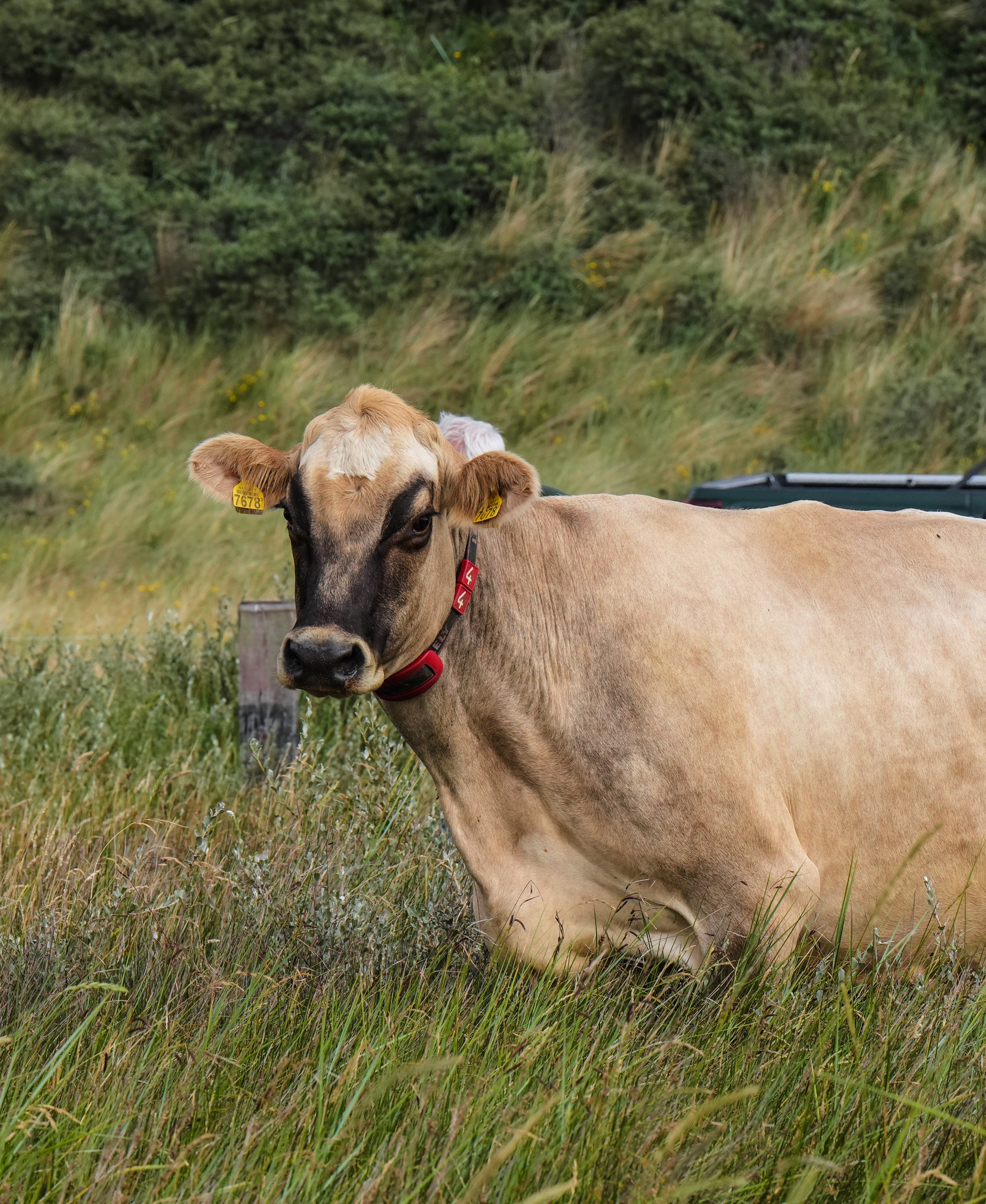
Joeri Lamers, a ranger with Staatsbosbeheer on Terschelling, explains that it was the islanders who proposed the idea of grazing: “When we were developing the Boschplaat Vision in 2017 and 2018, many islanders suggested letting livestock graze the overgrown salt marshes of the Boschplaat. It wasn't a crazy idea, because cows from Terschelling farmers have been grazing on De Groede, another part of the Boschplaat, for over a hundred years. There, the use of livestock has had a positive effect on plant growth.”
But does grazing fit into an area where, as emphasized in the Boschplaat Vision, nature is supposed to be given free rein? “It is indeed the intention that nature on the Boschplaat will rejuvenate itself and naturally increase in elevation through the deposition of sand and silt. By letting the area be grazed for a few years first, we are helping to kick-start that development. When the vegetation is short, sand blows across the area more easily, which helps create the dynamics we are so eager to bring back to the Boschplaat.”
“Thanks to the grazing, the dynamics are returning to the area more quickly”

Cows are the most suitable choice
It was ecologist Peter Esselink who advised Joeri and his colleagues to choose cattle for grazing. Peter conducted research into nature management through grazing on salt marshes in North Friesland and the Dollard. “When choosing between cattle, horses, or possibly sheep, cattle generally have the most favorable effect on biodiversity in a salt marsh.”
“Sheep are picky. They love certain plant species so much that they almost completely suppress them. Horses are true omnivores, but they are not ruminants. They can be on the move all day, which increases the risk of trampling and the loss of nests and chicks of breeding birds. Some plant species are also sensitive to trampling. Cattle fall in between: they are less picky than sheep and trample the soil less.”
Herd belonging to farmer Corné Zorgdrager
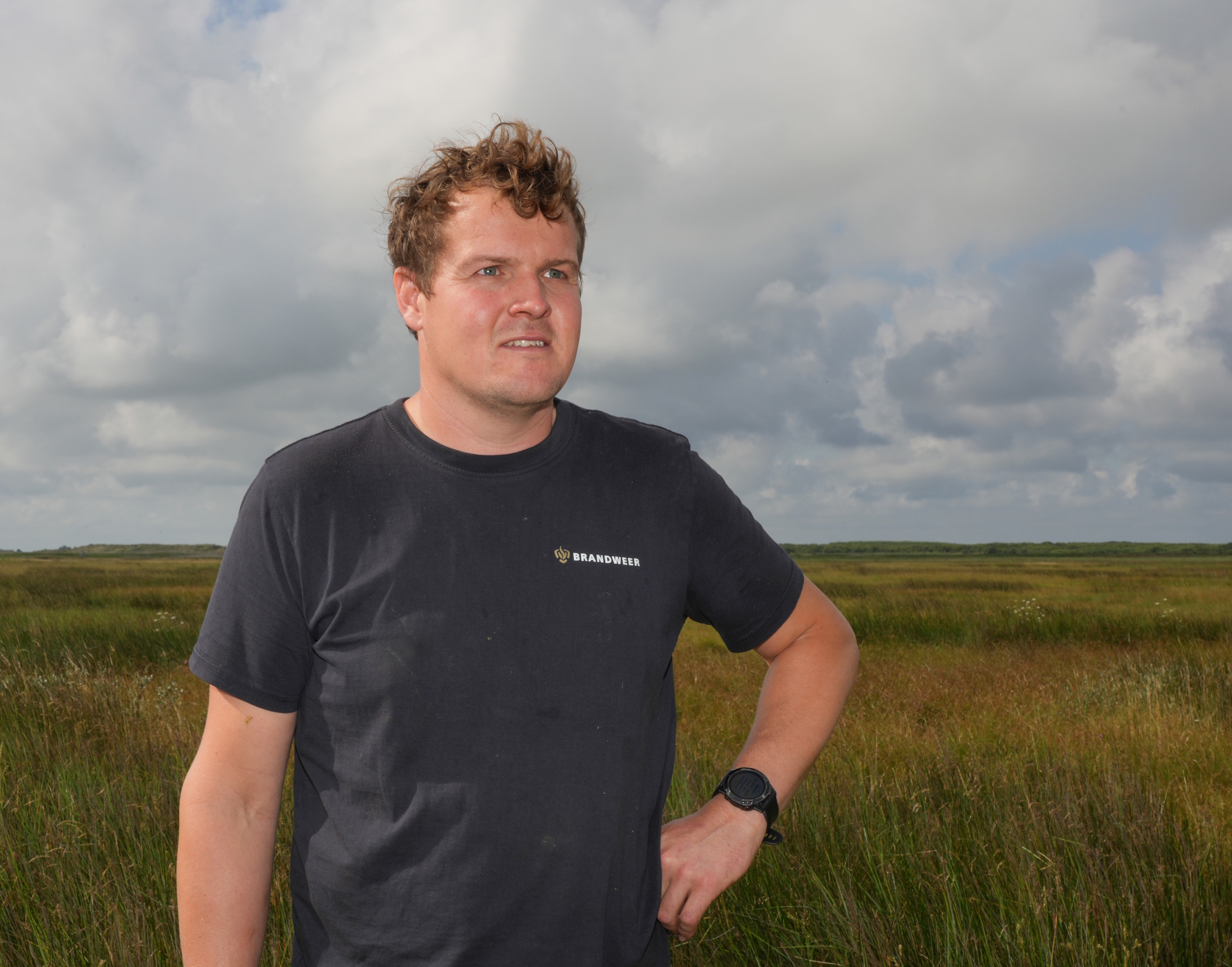
Cows were needed there, on the salt marshes of the Boschplaat. Staatsbosbeheer put out a call to all the island farmers: anyone interested in letting their animals graze in the area who also met a number of requirements could apply. Ultimately, the choice fell on organic farmer Corné Zorgdrager, who runs a dairy farm with about 120 cows. "Grazing the salt marsh fits well with our business," he explains. "We have an extensive dairy farm, which means we have relatively few animals in proportion to the amount of land we manage. We also use relatively little fertilizer. Now that we can let some animals graze on the Boschplaat, we can extend that even further."
Corné's herd is well-suited for life on the salt marsh: the farmer deliberately crossbreeds different cattle breeds. "This makes our cows strong and well-muscled. Even on a salt marsh, where the food supply is generally a bit sparser than in a lush pasture, they manage just fine." For the next twelve years, Corné is allowed to let his cattle graze on the Boschplaat from mid-July to the end of October. The animals have a total of sixty hectares at their disposal – this year they will have access to the entire area, while in the years to follow, they will graze a portion of it at a time.
"Our cows manage just fine on the salt marsh"
Beneficial for biodiversity and breeding birds
That rotation between different parts of the salt marsh is a deliberate choice. Ecologist Peter explains: "In this first year, the animals are feasting on the existing, mostly mature vegetation. This creates space for new growth – including for plant species that would otherwise be outcompeted by other species." In the years that follow, the animals will likely prefer areas with young vegetation, while leaving other parts of the terrain alone. "This creates a varied area where many plant and animal species feel at home."
Ranger Joeri believes that the grazing will also be beneficial for breeding birds: "The Boschplaat is an important breeding ground for countless bird species. Many of these species prefer to nest in low vegetation: it provides them with shelter while also allowing them to forage for food. Recently, tall grasses and reeds had been growing on this part of the salt marsh, which meant we were seeing fewer curlews nesting, for example. Now that the cows are keeping the vegetation shorter, I hope that more bird species will once again make the Boschplaat their nesting site."
Research into effects
What the actual contribution of the cattle will be will become clear in the coming years. Earlier this year, Staatsbosbeheer mapped the vegetation on the Boschplaat and conducted a breeding bird survey. Joeri: "This gives us a baseline of what lived in the area before the cows were introduced. Over the next few years, we will monitor how the biodiversity in the area develops."
Meanwhile, Peter is focusing on the soil of the salt marsh. Because the cows walk across the marsh, the soil becomes more compact, which hinders the natural elevation development of the marsh. Using six measuring points spread across the area, the ecologist – in collaboration with islanders – is investigating the long-term effects of grazing on soil accretion.
Beautiful spot
But for now, the cattle are free to roam the Boschplaat. Ranger Joeri is pleased that the first step in implementing the Boschplaat vision has been taken, and farmer Corné is happy with the extra space for his livestock. "We will be bringing cows here or picking them up regularly, so I expect to be spending a lot of time on the Boschplaat over the coming summers. Not a bad deal at all – this is a beautiful place to spend some time. Both for me and the animals."
Meer actualiteiten